Crypto Market Crash in 2026 What Investors Need to Know Now
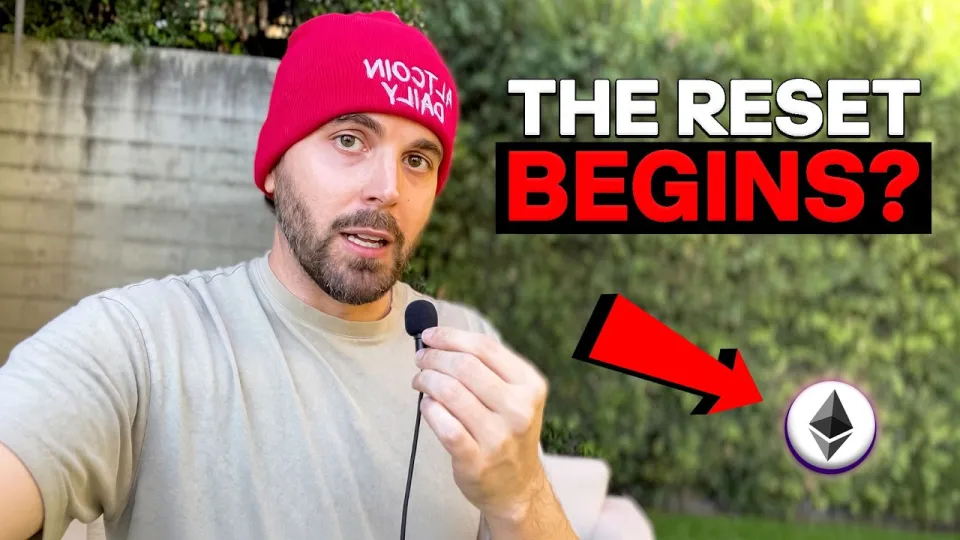
Video: Crypto Investors Are In Serious Trouble (market crash)
Want articles like this for your own video to promote it on YouTube and Google? Order them through the Telegram bot @sat_sit_bot. It writes articles around your video, embeds the video and publishes them on popular niche websites (no ads). Your first 50 articles are free.
· based on the channel Altcoin Daily
Key takeaways
- Bitcoin traded at $80,707 as of October 24, 2026, with a five-year CAGR of just 5.78%.
- A 5.78% annualized return over five years trails the long-run Bitcoin bull-cycle narrative and reframes the crash as a stagnation problem, not only a drawdown.
- Averaging down and holding through drawdowns remain the most common strategies among long-term holders.
- Ethereum's cycle structure is being questioned: Bitcoin makes higher highs each cycle, while ETH has not kept pace.
- The Altcoin Daily merch store is at https://altcoindailyshop.myshopify.com.
The crypto market crash in 2026 is best understood as a repricing of expectations rather than a single-day panic: Bitcoin was trading at $80,707 as of October 24, 2026, and its five-year compound annual growth rate had fallen to 5.78%. That number matters more than any red candle, because it means a five-year holder of the largest crypto asset has earned roughly what a conservative income portfolio might return, with far more volatility. Altcoin Daily's breakdown of the sell-off frames the moment as a test of conviction for anyone who bought the cycle top, and the practical response — hold, average down, or reassess — depends on position size and time horizon. Merchandise supporting the channel is available through the Altcoin Daily shop.
What the 2026 crypto crash actually looks like in the numbers
The defining data point of this drawdown is not the percentage decline but the five-year CAGR of 5.78% with Bitcoin at $80,707. A CAGR compresses every rally and every crash into one annualized figure, and 5.78% is a sobering result for an asset class that marketed itself on outsized upside. It also explains why long-term holders sound calmer than short-term traders: someone who accumulated across multiple cycles is still in profit, while someone who entered near the previous peak is underwater on a nominal basis.
The second structural issue is cycle asymmetry. Bitcoin has historically printed a higher high in each cycle, while Ethereum has not matched that pattern with the same consistency. That divergence is now a central question for portfolio construction: if the largest asset only delivers mid-single-digit annualized returns over five years, the case for holding smaller-cap tokens on the assumption of a repeatable altcoin season weakens considerably.
Why long-term holders are treating the crash as an entry window
A crash is a price event, not a thesis event, and holders with a multi-year horizon treat drawdowns as discounted accumulation. The logic is mechanical: if your plan is to buy a fixed dollar amount every month, a lower price buys more units, and the average cost basis falls. That is what averaging down means in practice, and it is why experienced investors describe a crash as more time to buy rather than a reason to sell.
The discipline required is real. Averaging down only works if the asset survives and if the investor has cash outside the position. Two guardrails help: keep a reserve in stablecoins or fiat so you are not forced to sell to buy, and set position-size limits so a single token cannot dominate the portfolio. Viewers of the Altcoin Daily coverage repeatedly raise the same point — the strategy is simple to state and hard to execute when every screen is red.
The manipulation argument and why it does not change your plan
Calling a sell-off normal manipulation is a popular explanation, and it contains a partial truth: thin order books and leveraged liquidations amplify moves in both directions. But the label does not alter the arithmetic. Whether the decline is organic selling or forced deleveraging, the price you pay and the size of your position are the only variables you control.
A more useful framing is to separate signal from noise. On-chain flows, ETF demand, regulatory headlines and macro liquidity are signals; a single red day is noise. If your reason for owning an asset has not changed, the crash is a pricing event. If the reason has changed — for example, if the five-year return profile no longer justifies the risk — then the crash is a prompt to resize, not to panic-sell.
Questions investors keep asking during a crypto drawdown
The most common questions during a crash are about timing, altcoin lists and specific price targets, and each has a practical answer. A price target such as a four-figure SOL by a future date is a bet on adoption and liquidity, not a forecast you can verify today. Treat any such number as a scenario, size the position accordingly, and never let a target replace a plan.
Portfolio disclosure is another recurring request: viewers want to see which altcoins a channel holds. The honest answer is that a public list is a snapshot, not a strategy — weights, entry prices and risk tolerance differ for every investor. Use published lists as research starting points, not as a model portfolio to copy. Similarly, questions about corporate Ethereum treasuries and when a large holder might start selling are governance and disclosure issues: watch filings and treasury policy statements rather than social media speculation.
Risk checklist before you add to a losing crypto position
Adding to a position during a crash should be a decision made in advance, not in the moment. Use this checklist:
- Confirm the thesis is intact: the asset's adoption, usage and competitive position should not have deteriorated since you bought.
- Cap the allocation: decide the maximum percentage of your portfolio a single token may occupy, and do not exceed it while averaging down.
- Fund from cash flow: use savings or income, never borrowed money or margin, because leverage converts a drawdown into a forced exit.
- Stagger entries: split purchases across several dates rather than one lump sum, which reduces timing risk.
- Set a review date: schedule a quarterly check of the position against your original thesis, and act on the result.
Where to find Altcoin Daily's links and resources
All official links referenced in the channel's coverage are collected here for convenience:
- Altcoin Daily merchandise store: https://altcoindailyshop.myshopify.com
Always verify a URL before entering payment details, and treat links posted in comment sections as unverified unless they match the channel's official listings.
Summary
The 2026 crypto crash is a test of process rather than prediction: with Bitcoin at $80,707 and a five-year CAGR of 5.78%, the era of assuming automatic outsized returns is over, and position sizing matters more than price targets. Long-term holders are averaging down with cash reserves and hard allocation limits, while traders are being forced to distinguish manipulation narratives from measurable signals. The practical takeaway is to review your thesis, cap your exposure and stagger any new purchases. This breakdown was produced by Altcoin Daily; for channel merchandise and support, visit the Altcoin Daily shop.
Questions & answers
Is the crypto market crashing in 2026?
The market is in a significant drawdown rather than a single-day collapse. Bitcoin was at $80,707 as of October 24, 2026, and its five-year CAGR had fallen to 5.78%, which is the more meaningful figure for long-term holders than any one red candle.
Should I average down during a crypto crash?
Averaging down lowers your cost basis only if the original thesis is intact and you have cash outside the position. Cap the allocation, use savings rather than margin, and stagger entries across several dates instead of buying in one lump sum.
Why has Bitcoin's five-year return dropped to 5.78%?
A CAGR compresses every rally and crash into one annualized number. After a strong multi-year run followed by a deep drawdown, the annualized figure falls sharply, which reframes the current period as stagnation rather than a repeatable bull cycle.
How should I think about altcoins like SOL and ETH right now?
Treat price targets as scenarios, not forecasts, and size positions according to how much you can lose. Bitcoin has historically made higher highs each cycle while Ethereum has not matched that pattern, so published altcoin lists should be research starting points rather than portfolios to copy.
Source: Crypto Investors Are In Serious Trouble (market crash) · Markdown version